Iran Iraq FMs discuss regional security Hormuz Strait Palestine and Yemen conflicts
Minister of Foreign Affairs of the Islamic Republic of Iran who has traveled to Baghdad to attend the 52nd Session of the Council of Foreign Ministers of the Organization of Islamic Cooperation (OIC) met and held talks with Fuad Hussein Minister of Foreign Affairs of the Republic of Iraq on Sunday morning.
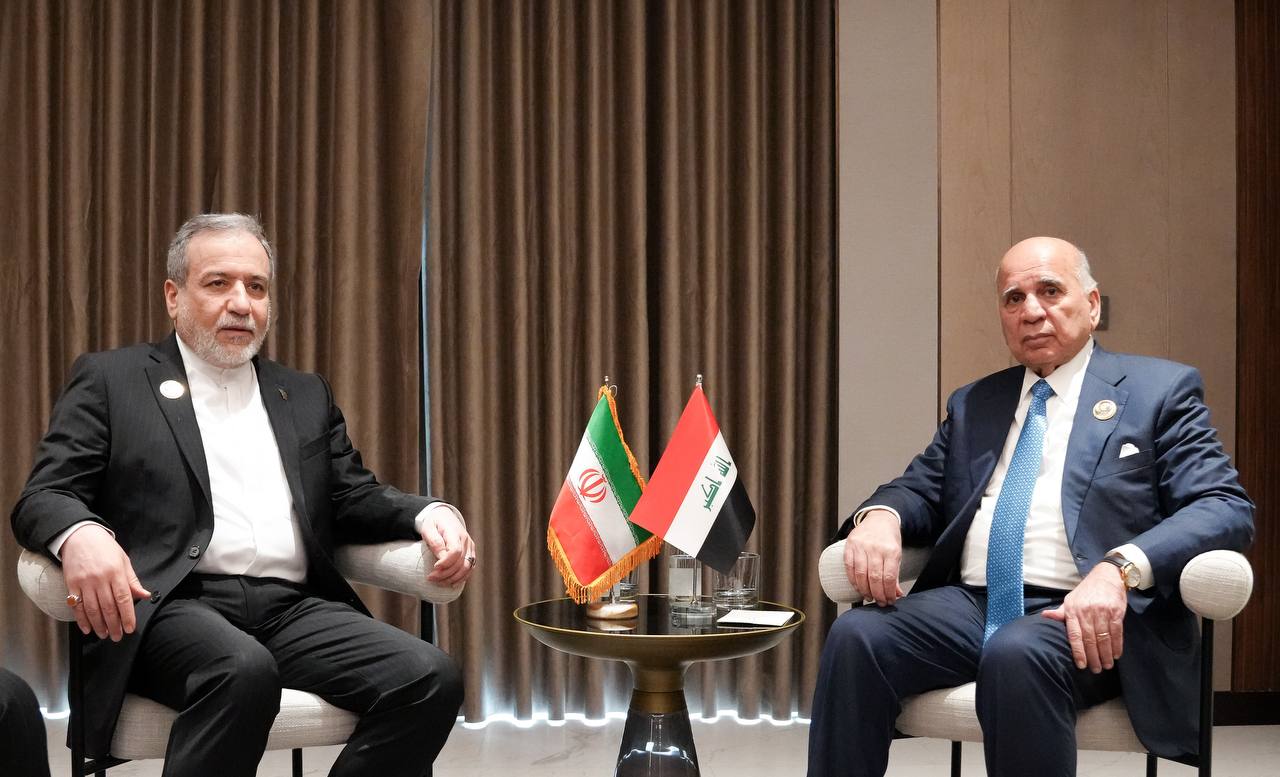
Minister of Foreign Affairs of the Islamic Republic of Iran, who has traveled to Baghdad to attend the 52nd Session of the Council of Foreign Ministers of the Organization of Islamic Cooperation (OIC), met and held talks with Fuad Hussein, Minister of Foreign Affairs of the Republic of Iraq, on Sunday morning.
The Iranian foreign minister expressed appreciation for Iraq’s hospitality and the excellent organization of the session, voicing hope that Iraq’s presidency of the OIC Council of Foreign Ministers would be marked by success and valuable initiatives to strengthen the organization’s standing.
Referring to the need for Islamic countries to pay due attention to issues facing the Muslim world, particularly the question of Palestine and the Israeli regime’s continued expansionism and warmongering in the region, Araghchi stressed the importance of strengthening dialogue and solidarity among Muslim nations to resolve differences, enhance cohesion, and promote Islamic unity in confronting threats.
During the meeting, the two sides exchanged views on Iran-Iraq relations and bilateral cooperation in various fields, particularly economic, trade, and security matters.
Araghchi also briefed his Iraqi counterpart on ongoing diplomatic developments related to regional peace and security, emphasizing that the Islamic Republic of Iran, just as it remains resolute and serious in defending its national interests and security, is equally steadfast in using diplomacy to prevent an escalation of tensions and resolve issues.
The Iranian foreign minister stressed that the insecurity prevailing in the Strait of Hormuz and its economic consequences for countries in the region and around the world were the direct result of the US-Zionist military aggression against Iran. Nevertheless, he noted that the Islamic Republic of Iran had declared its readiness to restore security to the Strait of Hormuz, provided the United States ceased its acts of aggression and intervention, as proposed in Iran’s seven-point plan.
The foreign ministers of Iran and Iraq also exchanged views on developments in the Arabian Peninsula and ways to help bring the conflicts to an end. Referring to the need to learn lessons from developments over the past decade, Araghchi stressed that the Yemen issue could not be resolved through the use of force and a blockade. Rather, it must be addressed within the framework of the UN Charter, with respect for Yemen’s national sovereignty and territorial integrity and the human rights of its people. He reaffirmed Iran’s readiness to provide any assistance that could help facilitate dialogue between the parties.
Referring to the importance of ensuring that Islamic holy sites are respected by all, Araghchi emphasized that, given the firm rejection of the claim that Yemen’s army had attacked the holy cities of Mecca and Medina, repeating this false allegation would not serve the interests of the Muslim Ummah. He added that the claim should not become a basis for division and discord within the Organization of Islamic Cooperation.