Speech by Seyed Abbas Araghchi at the “Muharram and Ashura in the Mirror of Foreign Ministry Documents”
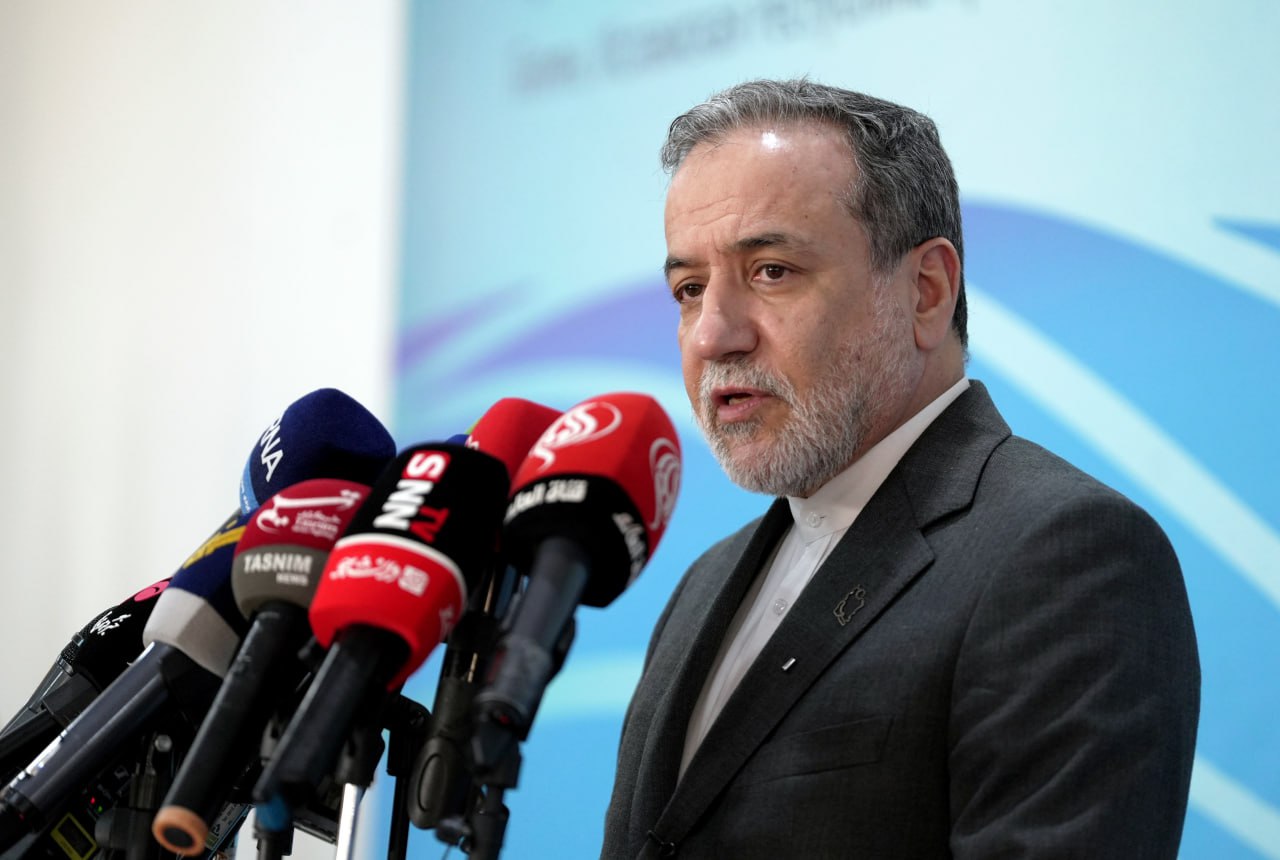
Speech by Seyed Abbas Araghchi Foreign Minister of the Islamic Republic of Iran at the “Muharram and Ashura in the Mirror of Foreign Ministry Documents” Documentary Event at the Institute for Political and International Studies — August 9 2026
In the Name of God, the Most Compassionate, the Most Merciful
الحمد لله رب العالمین و صلی الله علی سیدنا و مولانا ابی القاسم محمد و علی اهل بیته الطیبین الطاهرین المعصومین، بِهِمْ نَتَوَلَّی وَ مِنْ أَعْدَائِهِم نَتَبَرَّأ إِلَی اللَّه، الی یوم القیامه
Distinguished guests,
Ambassadors and heads of diplomatic missions of foreign countries residing in Tehran,
Esteemed scholars and clerics, university professors, researchers, cultural and media figures, and all those interested in the unique history, culture and heritage of Ashura,
Peace be upon you.
Today, we have gathered for the opening of an event whose subject is not merely the display of a collection of administrative documents and historical correspondence; rather, it is part of the living memory of a nation: a memory intertwined with the name of Imam Hussein (peace be upon him), the events of Karbala, the culture of Ashura and the rituals of Muharram.
The uprising of Hazrat Abu Abdullah al-Hussein (peace be upon him) in human history goes beyond being merely a historical or religious event. It is a “school of life” and an “everlasting charter” on the primacy of justice and the pursuit of truth; a “foundational document” of resistance against oppression, deviation and corruption; and a defense of the sanctity of human dignity.
This uprising is the universal language of justice. Throughout the centuries, the Iranian people have chosen this liberating school as the foundation of a faithful way of life in various spheres of personal, social and national life, and as their eloquent language of the pursuit of truth and opposition to domination in the international arena.
Today’s documentary event is a valuable opportunity to explore the collective memory of Iranians and revisit this land’s longstanding ties with the world through the lens of Muharram, Ashura and their associated rituals.
Every document bears witness to an interaction, and every page tells the story of an enduring effort reflecting the longstanding connection of Iranians with this uprising.
Examining hundreds of unpublished documents, some of which are being displayed for the first time today, confronts us with a fundamental truth: the protection of religious sanctities and the promotion of the culture of Ashura have always been part of the national commitment and diplomatic identity of Iranians in their engagement with the world, even despite the aversion to religion and hostility toward faith displayed by some rulers, particularly during the dark period of the Western-backed Pahlavi regime.
From reports of Ashura ceremonies being held in St. Petersburg, Istanbul, the Caucasus and cities across India, to the establishment of joint tekyehs in Baku and the Sharafat School in Baghdad, all bear witness to the fact that Iran has consistently served as a civilizational center of gravity for promoting human and spiritual values rooted in this ever-living Ashura heritage.
At deeper levels of these documents, the manifestation of Iran’s “civilizational pursuit of dignity” in confrontation with systems of domination and colonial powers can be seen.
Iranian diplomacy, as reflected in these documents, is not a dry, rigid and opportunistic diplomacy. Rather, it is a “human-centered diplomacy” that makes use of every opportunity to advance human values.
In other words, these documents bring history down from the level of official decisions to the level of human experience.
In these collections, Muharram and Ashura have not been recorded merely as religious rituals.
[08/09/2026 05:14 ب.ظ] Hamid Reza Babaee: What the documents reveal is the presence of Ashura in various spheres of social life and relations among nations: from ensuring the security of pilgrims and resolving their problems concerning residence and travel, to following up on their health and medical needs and even facilitating the return of impoverished pilgrims; from supporting the holding of mourning ceremonies by Iranians living abroad, to efforts to remove restrictions related to the Persian language and religious rituals; from repairing domes, courtyards and saqqakhanahs, to donating carpets, chandeliers and works of art to the holy shrines.
These documents clearly demonstrate that the culture of Ashura developed within a social context and has always been a forum for dialogue among popular traditions, jurisprudential perspectives, social imperatives and public responsibilities.
Studying these documents, rather than presenting a simple and uniform picture, reveals the multilayered and dynamic nature of this culture.
From this perspective, Ashura is both a legacy of faith and a legacy of ethics; both a reminder of oppression and a call to responsibility; both mourning and awareness.
The message of Imam Hussein (peace be upon him) in Karbala is not confined by geographical borders. It is the language of human dignity, opposition to humiliation, rejection of indifference and standing against oppression.
For this reason, the culture of Ashura has been able to create a basis for dialogue and empathy among different nations and cultures.
A careful examination of this entire collection of “documents,” “images” and “rituals” shows that Ashura has, in the truest sense of the word, transcended a historical event and evolved into a rich “civilizational phenomenon” imbued with lofty concepts.
Ashura connects yesterday with today and serves as this nation’s enduring guiding light in the many challenges of the past, present and future.
My dear brothers and sisters,
This year, Muharram and Ashura in Iran carry a different atmosphere.
The historic country of Iran was subjected to a cowardly and unjust attack by two arrogant, lawless and hostile-to-truth regimes, the United States and Israel, and offered numerous martyrs in the cause of the country’s freedom and dignity and the upholding of the Word of God.
The Hussein-inspired people of Iran witnessed with their own eyes the shedding of the blood of the Sayyed al-Shuhada of the Islamic Revolution and his pure children, from the Shajareh-ye Tayyebeh School in Minab to the Dena warship, as well as the sons of Lamerd and Iran’s valiant soldiers. Yet they stood firmly and courageously for their dignity and independence, demonstrating that they have lived the message of Ashura with every cell of their being.
Throughout history, many nations have faced critical moments, found themselves at fateful crossroads, and had their character put to the test and subjected to judgment. From poverty and siege to imposed war and aggression, oppressed nations at such decisive moments have been compelled to answer a fundamental question: Should they surrender and live under the yoke of oppression, or should they stand to the very end, even at the cost of their lives, for their values and ideals?
Dear brothers and sisters,
true patriotism is not blind loyalty to a land; rather, it is loyalty to the values that give that land meaning—freedom, justice, human dignity, and ensuring that future generations can live independently in their own geographical homeland and determine their own destiny.
Numerous historical examples, including Ashura, remind us that courage is measured not by conquest, but by readiness for sacrifice and the ultimate act of self-sacrifice for an ideal.
The heroes who have become the finest examples for generations were not those who sought domination and supremacy. On the contrary, they were those who stood firm in defense of their people and principles, and in the belief that right must prevail over power.
[08/09/2026 05:14 ب.ظ] Hamid Reza Babaee: This is how our master and leader, Hazrat Imam Hussein (peace be upon him), left this legacy for all his followers: that death with dignity is more honorable than a life of humiliation. This is the enduring logic of resistance.
He taught us that freedom requires sacrifice, and that readiness for the “ultimate sacrifice” is among the most important factors in the salvation and victory of a nation against the cruel and tyrannical forces of history.
History has repeatedly shown that when nations abandon sacrifice, perseverance and efforts to preserve their independence, they lose more than their territory.
They become vulnerable to losing their collective identity, national will and ability to shape their own future.
Recovering dignity once they have surrendered is, if not impossible, extremely difficult.
It is with this understanding and conviction, and of course with this strategic outlook, that Iran has remained steadfast in its commitment to resistance despite all pressures, and, God willing, will continue to do so.
Iran today is an Iran standing against the storm of injustice and oppression.
We stand by the pledge we made to the Sayyed al-Shuhada of our time, the great Leader, His Eminence Grand Ayatollah the martyr Seyyed Ali Hosseini Khamenei, and we will not allow this blood that has been unjustly shed to be forgotten or ignored.
We will neither forget nor forgive.
This blood will continue to boil and will make the tree of the pursuit of justice and the quest for justice grow stronger and more deeply rooted with each passing day.
For more than 1,400 years, the “movement for vengeance for Imam Hussein” has gone beyond being merely an emotional reaction and has evolved into a social movement and a political movement—a surging sea that never ceases to boil and surge, carrying the call for truth and justice from Karbala and the message of opposition to oppression embodied by Ashura to every corner of the world.
When Hussein cried out, “One like me cannot pledge allegiance to one like Yazid,” he laid the foundation for a movement that, more than fourteen centuries later, surged forth in the words of the Hussein of our time and once again made blood triumph over the sword.
It is this understanding and approach to building a movement around avenging bloodshed that has transformed Ashura into a school that cultivates and elevates human beings, and into a perpetual commitment to confronting the roots, causes and conditions of domination and oppression.
In conclusion, I would like to express my appreciation to all the researchers, experts at the Ministry of Foreign Affairs, document scholars and all colleagues who have contributed to the collection and organization of this exhibition.
In remembrance of Hazrat Abu Abdullah al-Hussein (peace be upon him) and the martyrs of Karbala, and in remembrance of the Sayyed al-Shuhada of the Islamic Revolution and the martyrs of the two recent wars, I hereby declare the exhibition open.
I am confident that the exhibition and the specialized session on Muharram and Ashura in the documents of the Ministry of Foreign Affairs will open a window toward a greater and deeper understanding of Iranians’ connection with the uprising of Ashura and will recount a part of their efforts to preserve Islamic values and human dignity.
Peace be upon you, and the mercy and blessings of God.